Local and regional authorities, together with public transport operators, universities and technology providers, have deployed shared mobility solutions in real-world conditions through the SUM Living Labs. These interventions, ranging from mobility hubs and MaaS platforms to demand-responsive transport, cycling infrastructure and data-driven tools, have been implemented directly within existing urban transport systems, with a clear focus on delivering measurable results.
The experience of the Living Labs go beyond implementation. The results are not only informing local decision-making, but are also being consolidated and made accessible through the SUM Open Data Platform, providing a shared evidence base for cities and regions across Europe. Building on this, the experiences from the Living Labs are feeding directly into our SUM SUMP Guidelines and upcoming policy recommendations, ensuring that tested solutions can be embedded and replicated into strategic planning frameworks across Europe. The results from the Living Labs demonstrate how shared mobility can be integrated into public transport systems as a scalable, evidence-based component of sustainable urban mobility, supporting cities in delivering on climate, accessibility and efficiency objectives. It should be clear, that based on the results from our Living Labs, new shared mobility systems are no longer a concept under discussion, but a working component of urban transport systems. Under the correct planning and strategic implementation, they clearly deliver measurable benefits and support urban and peri-urban mobility systems in advancing accessibility, efficiency and climate goals.
SUM Living Labs in action
Scaling integrated mobility across the Geneva metropolitan area
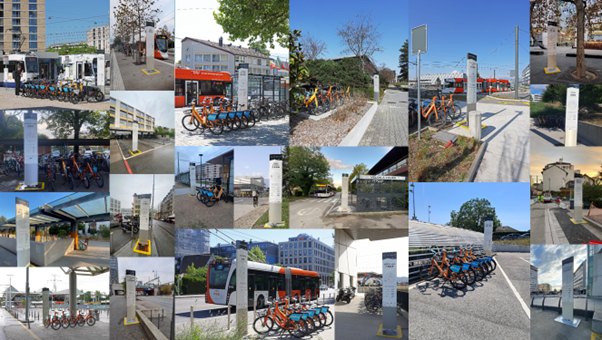
Geneva’s Living Lab has delivered an expansion of integrated shared mobility services. Over the course of the project, 21 mobility hubs have been deployed across 11 municipalities, creating a growing network of multimodal nodes connecting public transport with shared services. The ecosystem has expanded to more than six shared mobility operators and over 500 bike-sharing stations, significantly increasing the availability of micro-mobility across the canton. In parallel, on-demand services such as tpgFlex have been extended in terms of coverage, operating hours, and vehicle fleets, while new solutions, including employee shuttles and upcoming autonomous vehicle pilots connected to the ULTIMO project, are being prepared.
Alongside infrastructure and services, Geneva has scaled data-driven and behavioural approaches. The Evomoov mobility management platform, now used by 127 companies, supports employers in shifting commuting patterns, already leading to increased public transport subscriptions and reduced parking demand. Complementing this, 600 nudging bundles have been sold, generating more than 10,000 recorded trips, demonstrating the impact of targeted incentives on travel behaviour. Overall, 78% of users report satisfaction with shared mobility services, reflecting strong uptake and acceptance.
Building on these results, Geneva is preparing the launch of a new unified mobility app in mid-2026, which will integrate TPG services, lake transport, CFF, SNCF, and intercity bus lines into a single platform.
Larnaca supports multimodal mobility through MaaS and public transport integration
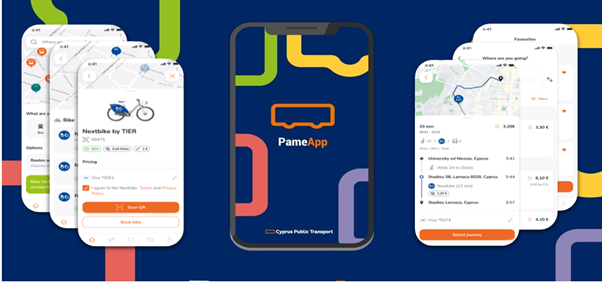
Larnaca’s Living Lab has focused on strengthening the integration between public transport and shared mobility. A central achievement has been the deployment of a MaaS-enabled system with the PAME app, integrating bus services with bike-sharing, including journey planning, ticketing, real-time information, and bike unlocking. This integration has significantly boosted uptake, with bike-sharing usage increasing from 16% to 41% following its inclusion in the MaaS environment. Complementing this, integrated ticketing and nudging schemes introduced combined bus-and-bike incentives and new pricing models to encourage multimodal travel.
At the same time, the city expanded its shared mobility offer through the extension of the bike network, adding 100 new bikes across 10 locations, delivering strong usage results. In 2025 alone, the system recorded 50,846 rides, covering 172,281 km and saving 43.1 tonnes of CO₂, while micro-mobility’s modal share reached 14%, highlighting growing user adoption. Public transport performance has also been strengthened, with significant increases in bus frequency on key routes, including +85% on Route 417 and +20% on Route 421, contributing to a 50% increase in ridership year-on-year.
In parallel, Larnaca is advancing parking restriction measures and park-and-ride infrastructure through its Sustainable Urban Mobility Plan, aiming to reduce congestion and shift demand towards sustainable modes. Supporting these interventions, the Living Lab deployed an advanced transport modelling framework (HARMONY MS) to test scenarios and assess impacts. Results show a 3.9% reduction in CO₂ emissions, a 20.4% decrease in peak-hour delays, and a 6% increase in average network speed, alongside the removal of 772 vehicles per hour during morning peak periods through park-and-ride operations.
Krakow: Bringing flexible transport to underserved areas
Kraków’s efforts have been connected to improving accessibility to public transport in peripheral areas through the deployment of a new demand-responsive transport (DRT) service, LajkBus, replacing the previous TeleBus system with a more flexible and user-oriented model. Since its launch in February 2025, the service has recorded over 50,500 passengers and more than 41,500 bookings, demonstrating sustained demand. The system also shows strong operational performance, with an average pooling rate of 65%, indicating effective ride-sharing and optimisation of vehicle use.
User uptake has been constant within the service area of approximately 6,500 residents, with 2,640 registered users, of which 1,223 have already used the service and around 200 are regular users. Importantly, the service has contributed to modal shift, with 45% of users reporting a transition from private car use to combined travel with LajkBus and public transport, according to the project surveys. Accessibility improvements are also significant, with the share of residents within walking distance of a stop increasing substantially, for example, from 30.4% to 85.1% within 200 metres, and reaching near-total coverage at 400–500 metres.
Fully integrated with the public transport system, LajkBus allows users to travel using standard public transport tickets, ensuring seamless multimodal journeys and connections to key interchange points such as the Czerwone Maki hub. On-demand transport, when integrated with existing public transport and tailored to local needs, can improve accessibility, optimise service provision, and encourage a shift away from private car use, particularly in underserved areas.
How Coimbra is shifting mobility through incentives and regulation
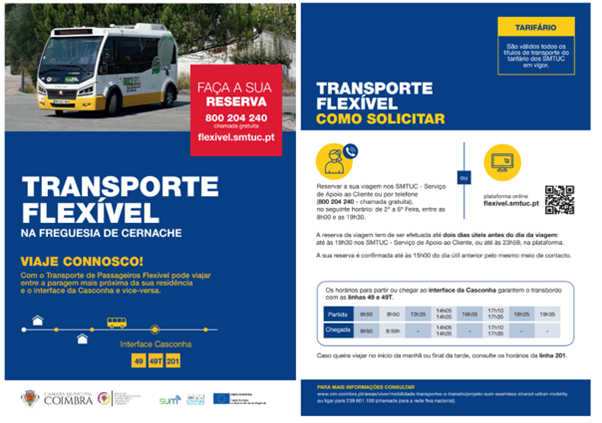
Strengthening the public transport system has been the goal of Coimbra on SUM. Through a combination of infrastructure, service as well as push and pull measures, the Living Lab has managed to improve accessibility within their city and suburban area. A key intervention has been the introduction of an on-demand transport service in peripheral areas, designed to provide first- and last-mile connections to the public transport network. This has been supported by the development of a dedicated digital platform, including a call centre to ensure accessibility for elderly and digitally excluded users.
At the same time, Coimbra has implemented a broad set of complementary measures to enhance sustainable mobility. Active mobility infrastructure has been expanded, with new bike paths developed and monitored through installed counters, recording over 58,000 bicycle trips in a short observation period, alongside the creation of pedestrian zones and traffic-free streets. Public transport has also been reinforced through fare integration (including BRT and SMTUC services), reduced and free fare schemes targeting young and vulnerable users, and ongoing improvements to service conditions and stops. Fleet renewal is underway, with 46 electric buses already in operation and a target of 45% electrification by 2026, supported by additional vehicles and charging infrastructure.
Additional measures such as the creation of park-and-ride facilities and the planned development of mobility hubs aim to further support multimodal travel and reduce congestion. While challenges remain in optimising the on-demand service model, the case of Coimbra is a comprehensive package of infrastructure upgrades, pricing policies, and service improvements that supports a gradual shift towards more sustainable and inclusive urban mobility.
Safer and more actives streets in Penteli
Penteli’s Living Lab has deployed a range of measures to expand sustainable mobility options and improve multimodal integration at the local level. This includes the rollout of an e-bike sharing system with 38 e-bikes and 6 docking stations, as well as the reintroduction of local public transport services with new electric buses, offered free of charge to users. A Mobility-as-a-Service (MaaS) platform, developed with FREENOW, further supports integration through features such as geofencing, multimodal journey planning, and API-based connectivity, complemented by a digital map of the local transport system.
Early results point to growing user engagement and system integration. Surveys show that 57.9% of users consider the new mobility services very or extremely useful, while multimodal integration has reached full coverage within the system. In addition, users of e-bikes demonstrate higher usage intensity compared to non-users (increasing from 40% to 50%), indicating behavioural shifts towards active mobility, even if overall usage is still scaling.
These services are underpinned by significant changes to the urban environment through street space reallocation and retrofitting interventions, including the development of a cycle street network of over 5 km (around 50% already implemented) and the introduction of 30 km/h speed limits to improve safety. The establishment of a mobility hub in Melissia square further supports modal integration, contributing to accessibility improvements of up to 45% when combining hubs, cycling infrastructure, and public transport.
Munich’s Car sharing and hubs as part of public mobility system
In order to promote a shift towards multimodal travel, shared mobility and the strategic deployment of carsharing infrastructure and mobility hubs has been the goal of Munich partners. A central measure has been the expansion of dedicated carsharing parking spaces, with a target of up to 1,600 spaces (1,000 for free-floating and 600 for station-based services), of which 827 have already been implemented by March 2026. In parallel, the city is developing a network of 200 mobility hubs, with 128 already in place, designed to strengthen intermodal connections and improve accessibility across the urban area.
These measures are already contributing to increased uptake and system efficiency. Carsharing usage has grown in terms of both trips and kilometres travelled, supported by a steady expansion of vehicle fleets, while the number of active users increased by 25.4% between 2023 and 2025. Importantly, evidence shows that one carsharing vehicle can replace up to 23 private cars, underlining the potential impact on reducing car ownership and freeing urban space. At the same time, multimodality has improved, with data indicating a decrease in private car use and increased use of shared mobility options, particularly across e-scooters, carsharing, and bike-sharing services.
Further analysis highlights the strong integration potential between carsharing and public transport. In Munich, only 4.4% of carsharing trips lack public transport access within a 500-metre radius, indicating high spatial complementarity between modes. In addition, simulations show that up to 36.6% of inner-city trips could be pooled, pointing to further opportunities for efficiency gains. Carsharing infrastructure also contributes to reducing parking pressure, with 58% of users reporting that designated parking spaces help alleviate parking search, supporting smoother traffic flows.
Jerusalem plans future mobility through data and simulation
Jerusalem’s Living Lab has focused on improving accessibility and multimodal integration in a rapidly growing urban area, combining infrastructure upgrades with advanced data-driven planning. In the Yuvalim–Ganim district, where the population is expected to grow from over 40,000 to more than 80,000 residents, major investments are reshaping connectivity. The extension of the Light Rail Transit (LRT) Red Line, adding 12 new stations (6 within the Living Lab area), significantly improves access to employment centres and essential services such as Hadassah Hospital. Supporting measures include park-and-ride facilities (expected by 2026) and 20 public elevators (4 within the Living Lab), addressing the city’s steep topography and improving access to public transport.
A central component of the Living Lab is the development of ridepooling services through a simulation–optimisation framework, designed to identify the most efficient service configurations before deployment. More than 2,000 ridepooling scenarios have been evaluated, allowing the identification of promising, data-backed operational models tailored to local demand patterns. These results are being translated into concrete policy recommendations for the Ministry of Transport, with the aim of supporting the implementation of a pilot service and improving the efficiency of public investment.
In parallel, active mobility has been strengthened through the deployment of 18 bike-sharing stations within the Living Lab (out of 130 citywide) and new cycling infrastructure. Integration with public transport is already visible, with 30% of bike-sharing trips starting or ending at LRT stations, and daily trips in the area increasing from 9.5 to 24 following the LRT extension, while key corridors such as Golomb Street record around 700 daily cycling trips.
Rotterdam: Reducing uncertainty in shared mobility with predictive tools
Rotterdam has improved the integration between public transport and shared mobility through the development of a predictive data-driven system, enabling users to better plan multimodal journeys. The initiative is based a prediction model integrated into the RET app, which provides users with real-time and forecasted availability of shared mobility services, addressing a key barrier to uptake—uncertainty about vehicle availability. Initially deployed at a single location, the system is now being scaled across the RET network to up to 19 locations, covering metro, tram, and bus stops within walking distance of mobility hubs.
The model has already demonstrated its influence on user behaviour, with early results showing that users tend to select shared mobility options based on predicted availability, improving reliability and user confidence in multimodal trips.
Building on these results, Rotterdam is working towards a fully integrated multimodal journey planner, combining public transport and shared mobility into a single, seamless user experience. Future developments include expanding the model to cover multiple shared mobility providers, strengthening API-based data exchange, and mapping all mobility hubs within the RET system.
Land and water connected in everyday travel in Fredrikstad
Fredrikstad’s Living Lab has set its focus strong on waterborne mobility and first/last-mile connections. For that, they have introduced the HYKE autonomous electric ferry, piloted at the Bekkhus stop and progressively integrated into daily operations. This has been complemented by targeted first- and last-mile measures, including a free commuter bike service in the Øra industrial area and a pilot minibus service connecting key areas such as Gamlebyen, Vaterland, and Øra during peak hours.
These interventions are supported by broader infrastructure and behavioural shifts. The city has expanded and upgraded its cycling network and adjusted traffic circulation in the city centre to prioritise active mobility and public transport. Data shows that cycling accounts for 4–5% of all trips, remaining stable with a slight increase in recent years, while e-bike use has grown significantly, from 20% to 38% of total cycling, indicating a key behavioural shift. Usage patterns also show that 55–60% of users cycle weekly or more, pointing to a stable and habitual user base.
Strong multimodal integration is emerging as a defining feature of the Living Lab. Between 41% and 46% of users combine cycling with the city ferry, demonstrating effective links between modes. This is supported by continuous monitoring through four permanent counting stations, recording 127 to 309 cyclists per day, and confirming an overall 14% growth in cycling volumes. Together, these results highlight how combining innovative services, infrastructure improvements, and continuous data collection can drive behavioural change and strengthen multimodal mobility systems aligned with SUMP objectives.
Turning experience into guidance
Building on the experience of the SUM Living Labs, a set of upcoming policy recommendations is being developed to support cities and regions in integrating shared mobility into their transport systems. These recommendations draw directly on tested measures and measurable results, translating them into practical guidance for different urban contexts.
Across all Living Labs, several consistent insights emerge for authorities, operators, and planners working to integrate shared mobility into their systems.
- Integration is critical. The most effective approaches combine enablers such as physical infrastructure (such as mobility hubs), digital tools (MaaS platforms, apps), and service coordination, ensuring that shared mobility complements rather than competes with public transport.
- User experience is a determining factor. Simplicity, inclusivity, and visibility, whether through integrated ticketing, real-time information, or predictable service availability, are essential to drive uptake and sustained behavioural change.
- Infrastructure and public space matter. Investments in cycling networks, pedestrian areas, and multimodal hubs are not secondary, they are foundational to enabling shared mobility to function effectively.
- Data and continuous monitoring enable better outcomes. From behavioural surveys to real-time operational data and simulation tools, cities that leverage data can better design, adapt, and scale their mobility systems.
- Local context shapes implementation. Solutions must be tailored to urban density, geography, governance structures, and user needs, particularly in suburban or lower-density areas where different models are required.
Towards systemic integration
Shared mobility is becoming part of how urban transport systems are being planned and delivered to respond to those places where neither private mobility nor public can provide an answer. In many cities, the focus is already shifting from isolated measures to how these services fit into the wider network. But change in mobility systems rarely happens quickly. Travel habits, planning frameworks and investment patterns take years to evolve, and even longer to redirect once established. What the Living Labs show is that this shift is underway with a full package of actions, but it requires persistence, continuity and a willingness to adjust along the way.
Cities are not starting from scratch. With measures, real-world experience and a growing evidence base, they are better equipped to move forward, step by step, towards more integrated and balanced mobility systems.